Bezel vs prong tennis bracelet: which setting should you choose?
Prongs expose more of the diamond and produce more sparkle; bezels wrap each stone in a rim of gold and produce a smoother, more protected piece. Both are correct. They create different objects, and the choice is about how you want the bracelet to behave on your wrist.
What is a prong tennis bracelet?
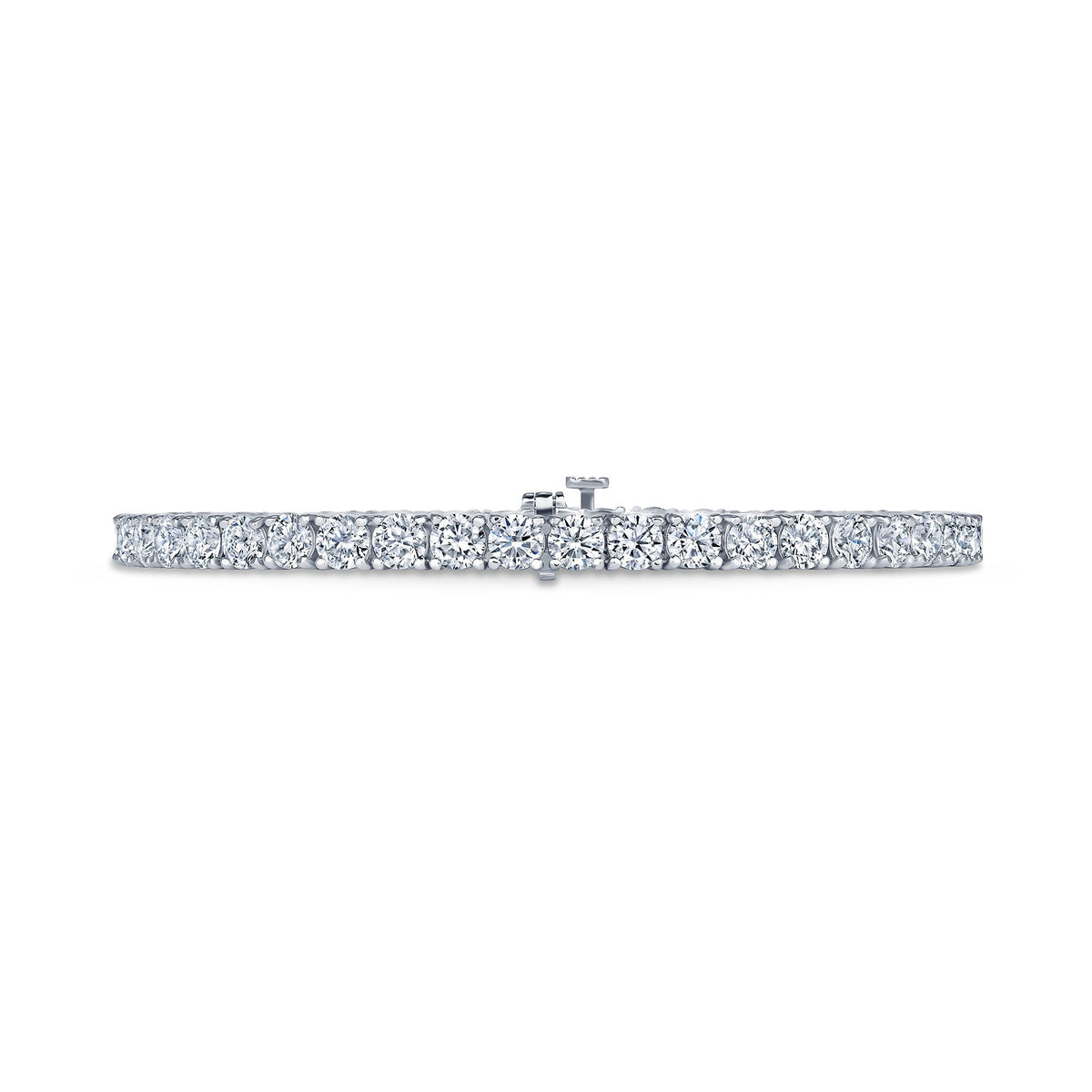
Small points of metal hold each diamond at its girdle, leaving the sides of the stone open. Light enters from several directions rather than only the top, which is what produces the bright, airy line people picture when they think of a tennis bracelet.
Settings use three prongs, four prongs, or shared prongs, where neighboring stones borrow the same prong. Shared prongs reduce the visible gold between diamonds and tighten the line of light.
What is a bezel tennis bracelet?
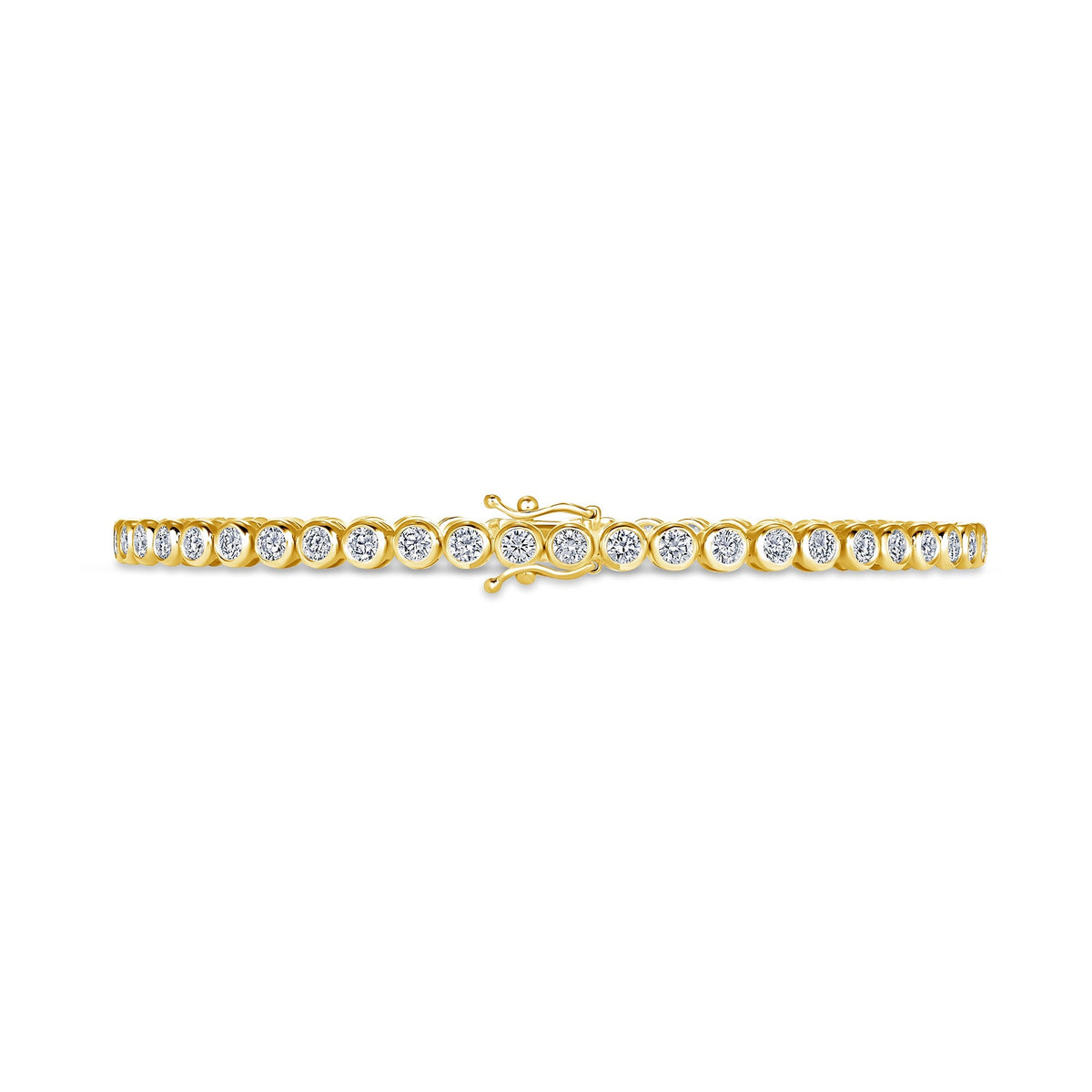
A continuous rim of gold surrounds each stone. The girdle. The diamond's widest and most vulnerable edge, sits inside metal rather than exposed, and the outer surface of the bracelet is smooth.
A bezel also brings more gold into the design. In yellow gold especially, the warm rims become part of the rhythm of the piece rather than just a way of holding stones.
Which sparkles more?
Prongs. More of each stone is open to light, and light entering from the side contributes to what you see. A bezel returns light mainly through the top, so it reads as bright but calmer, diamond alternating with gold rather than a continuous run of stones.
If maximum brilliance is the priority, prongs win. If you like the look of gold and diamond together, that is not a compromise. It is the reason to choose a bezel.
Which is better for everyday wear?
Bezel. There is nothing to catch on a sleeve, a bag strap, or hair, and the setting protects the stone edge from the knocks that daily wear delivers. It also sits lower, which suits anyone who works with their hands or simply forgets they are wearing jewelry.
Prongs are entirely wearable. They have been the standard for a century, but they reward the occasional check that everything is still tight.
Which needs more looking after?
Prongs. They are small pieces of metal doing real work, and they can bend or wear thin over years. Hold the bracelet to your ear and tap it gently twice a year: a stone that rattles is loose. A bezel has no prongs to bend, so it asks less of you.
Both benefit from a clean behind the stones every few weeks. See jewelry care.
Which should you choose?
| Choose prong if | Choose bezel if |
|---|---|
| You want maximum sparkle | You want a smooth, low profile |
| You want the classic look | You wear it every day |
| The diamonds are the point | You like visible gold in the design |
| You prefer white gold | You prefer yellow gold |
Rosette makes both: the four-prong tennis bracelet at 5, 7.5 and 10 carats, and the bezel tennis bracelet at 2.5, 3.5 and 4.5 carats. Both in solid 14K gold with a box clasp and figure-eight safety catch.
Setting is a design decision we make at the start of a piece, not a detail at the end. It determines the sparkle, the proportions, the comfort and the character of the finished bracelet. If you would like to handle both before choosing, book an appointment.