Diamond stud size guide: how big should lab grown diamond stud earrings be?
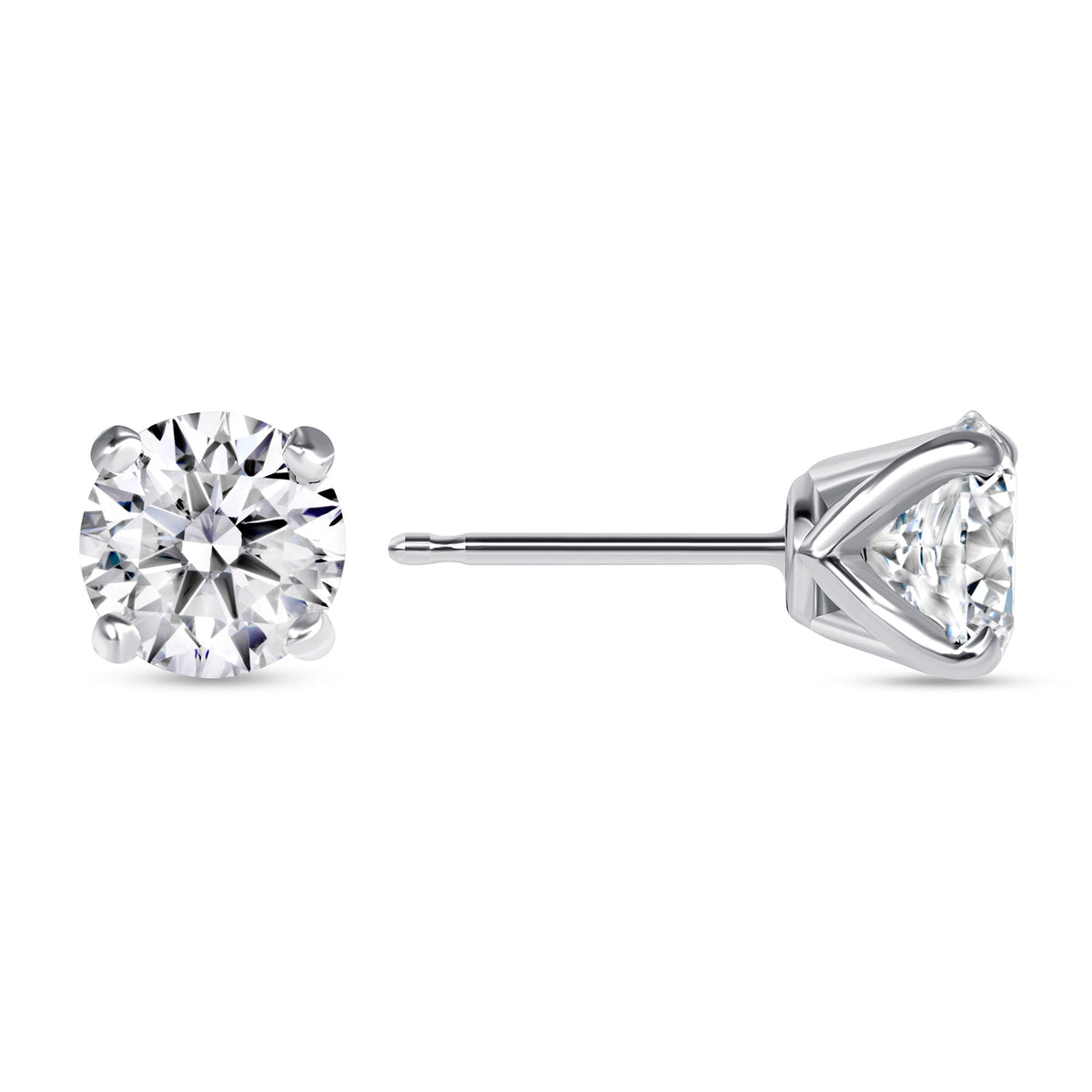
For round brilliant diamond studs, a 1 carat total weight pair measures about 5.2 mm per ear, and a 2 carat total weight pair about 6.5 mm per ear. Carat is a measure of weight; millimeters tell you how large the diamond actually looks on your ear. Both matter, and they answer different questions.
Total carat weight means the pair, not each stone
Diamond stud earrings are quoted by total carat weight, abbreviated CTW or ctw. That figure is the two diamonds combined. A 2 carat total weight pair holds roughly 1 carat in each ear.
This convention is standard across the industry, and it is worth confirming when you compare prices, because sellers vary in how clearly they state it.
Diamond stud size chart
Approximate diameters for round brilliant diamonds:
| Total carat weight | Per ear | Approx. diameter each |
|---|---|---|
| 0.5 CT | 0.25 ct | 4.1 mm |
| 1.0 CT | 0.50 ct | 5.2 mm |
| 1.5 CT | 0.75 ct | 5.9 mm |
| 2.0 CT | 1.00 ct | 6.5 mm |
| 3.0 CT | 1.50 ct | 7.4 mm |
| 4.0 CT | 2.00 ct | 8.2 mm |
| 5.0 CT | 2.50 ct | 8.8 mm |
| 6.0 CT | 3.00 ct | 9.4 mm |
| 8.0 CT | 4.00 ct | 10.3 mm |
| 10.0 CT | 5.00 ct | 11.1 mm |
These figures are approximate. Every diamond has its own proportions, and cut can make one stone face up slightly wider than another of identical weight.
What size diamond studs are best for everyday wear?
For daily wear, 1.0 to 2.0 carats total weight is the range most people settle on. It reads clearly across a room without dominating the ear.
- 0.5 to 1.0 CT. A fine, quiet point of light. Sits close to the lobe and layers easily with a second piercing.
- 1.5 to 2.0 CT. The everyday balance. Visible at conversational distance, still easy to wear with anything.
- 3.0 to 4.0 CT. A deliberate statement. The diamond becomes part of how you are dressed.
- 5.0 CT and above, covers a substantial part of the lobe and carries real presence.
Does ear size change how big diamond studs look?
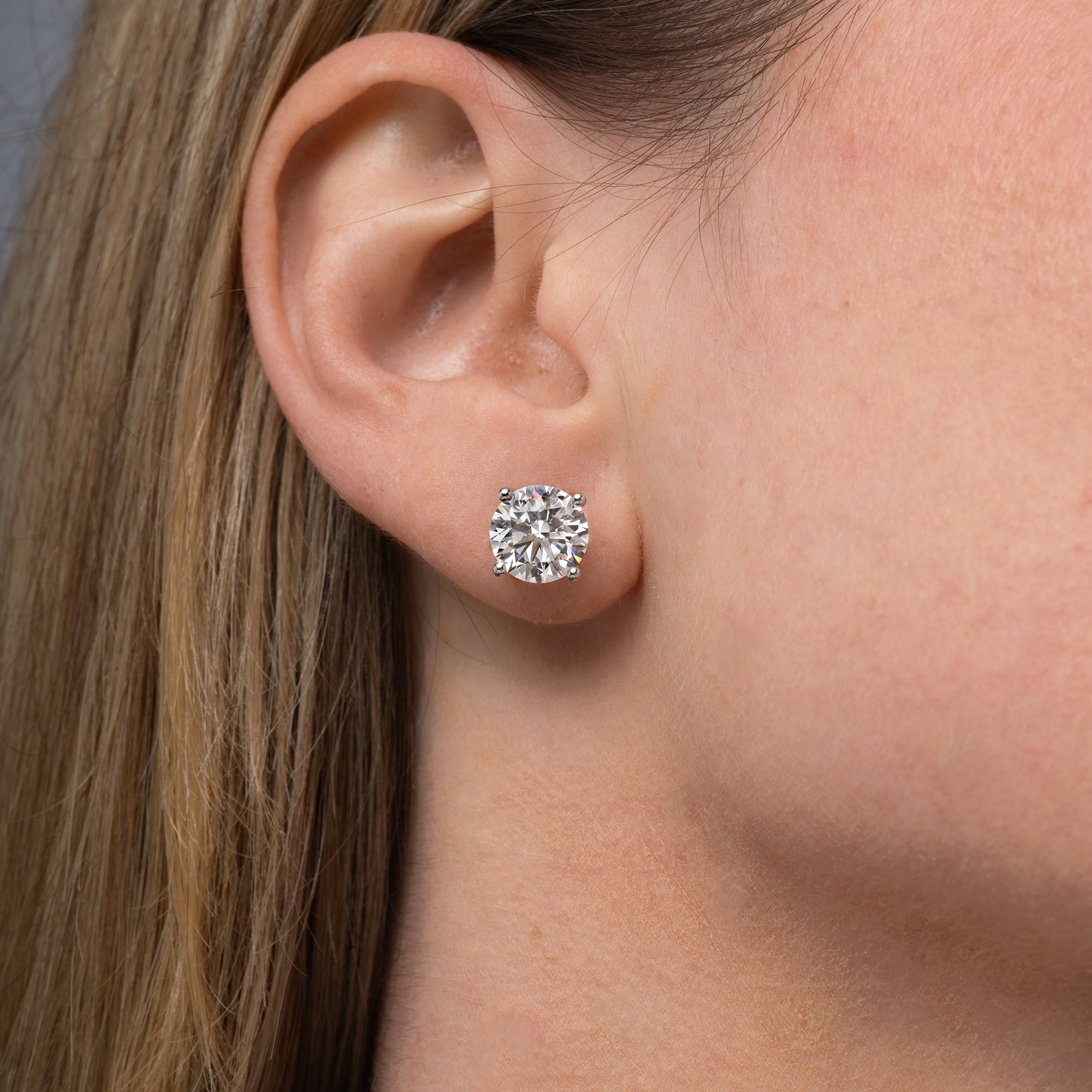
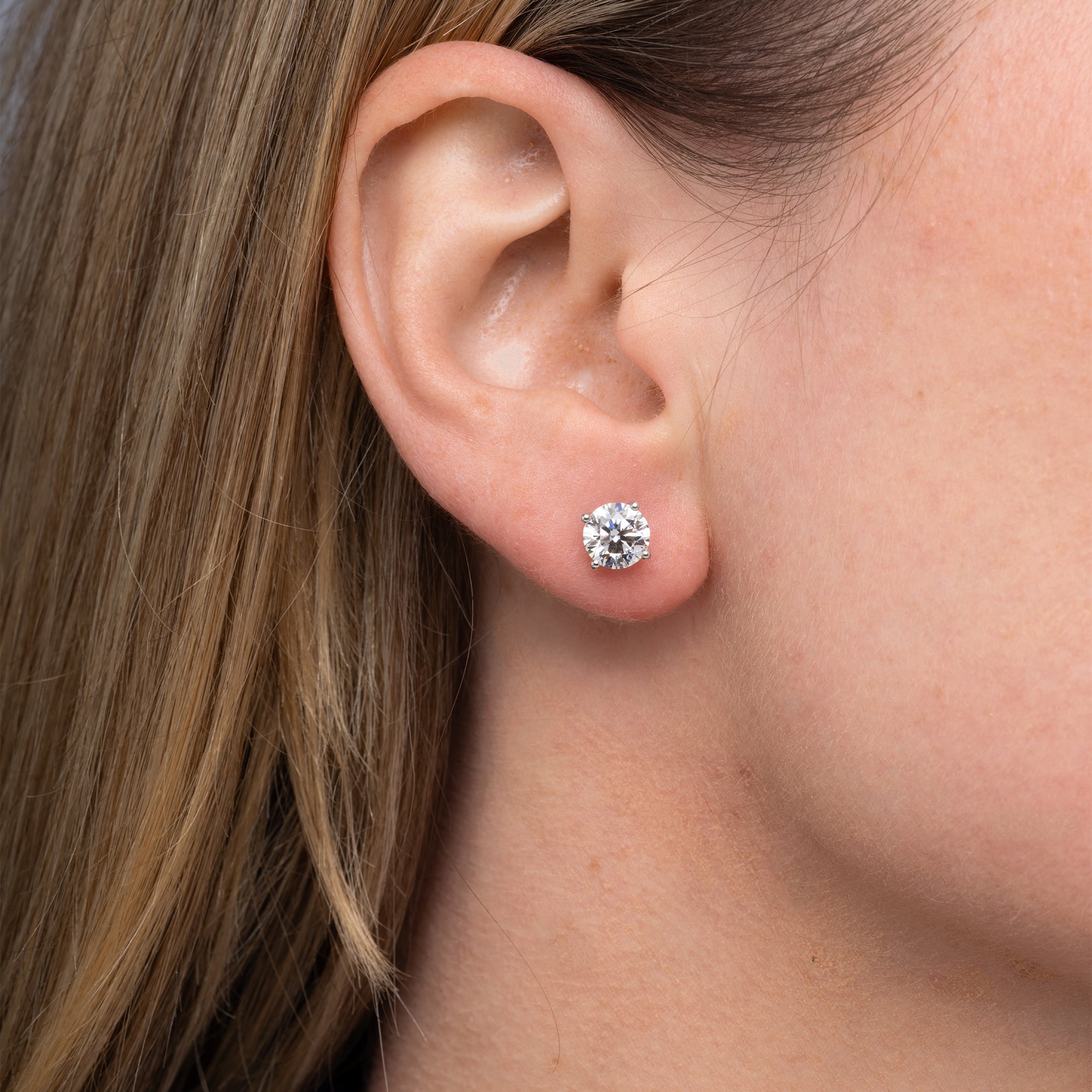
Yes. The same 2 carat total weight pair reads larger on a smaller lobe and more restrained on a larger one. If you are between two sizes and want the earrings to be noticed, the larger one is usually the one people keep reaching for.
Should you shop by carat weight or millimeters?
Use both. Carat weight tells you how much diamond you are buying. Millimeter diameter tells you how much diamond you will see from the front.
The distinction matters most when you are comparing two pairs of similar weight. A shallow-cut stone can spread wider and look larger while returning less light; a well-proportioned stone of the same weight may face up marginally smaller and look considerably brighter.
Our recommendation
Start with the look you want, quiet, everyday, noticeable, or statement, then check the millimeter diameter alongside the total carat weight. The right size is the one that looks balanced on your ear and feels natural enough that you stop thinking about it.
Rosette diamond studs are made from 0.5 to 10 carats total weight, in solid 14K white or yellow gold, set with IGI-certified lab-grown diamonds and made to order in our Los Angeles workshop.