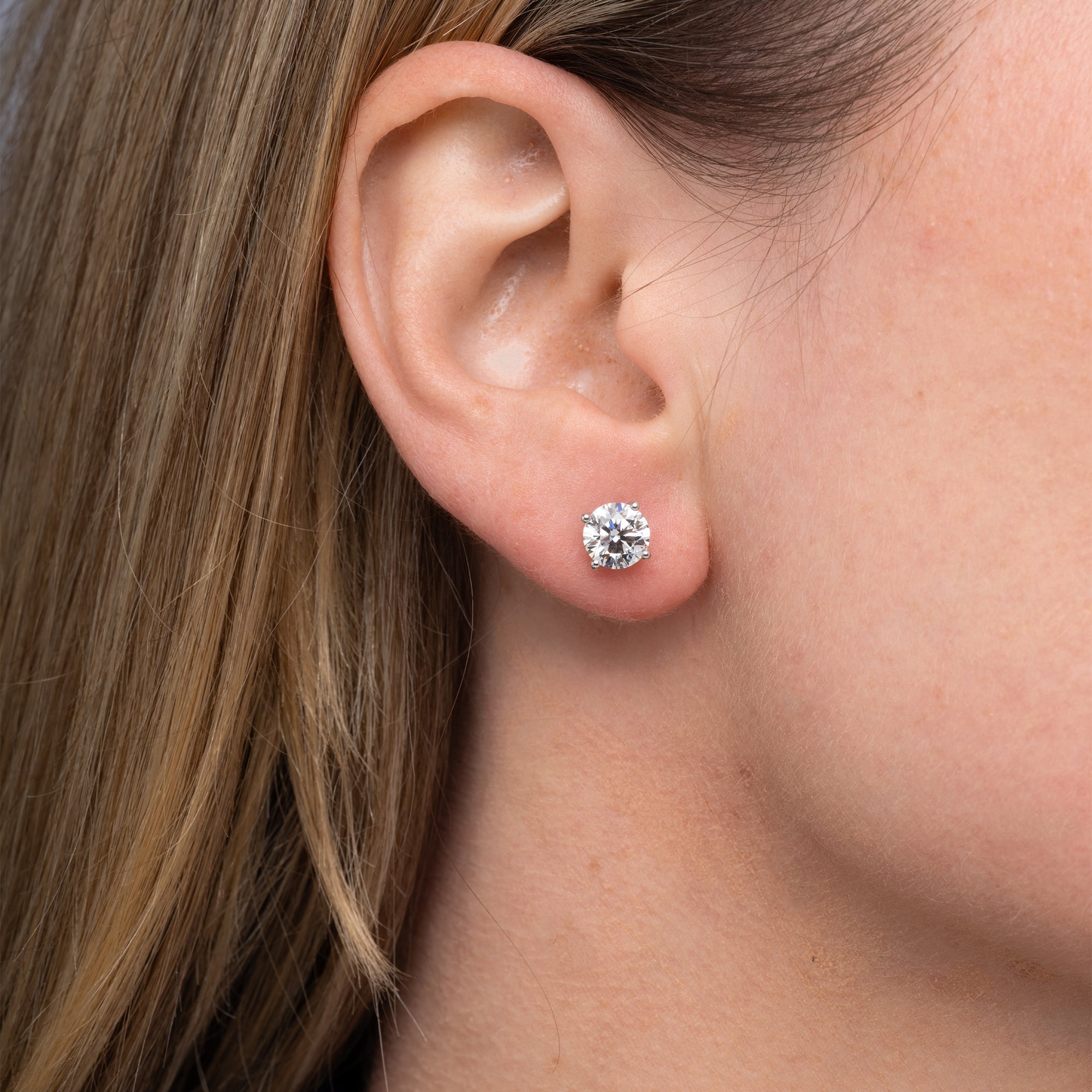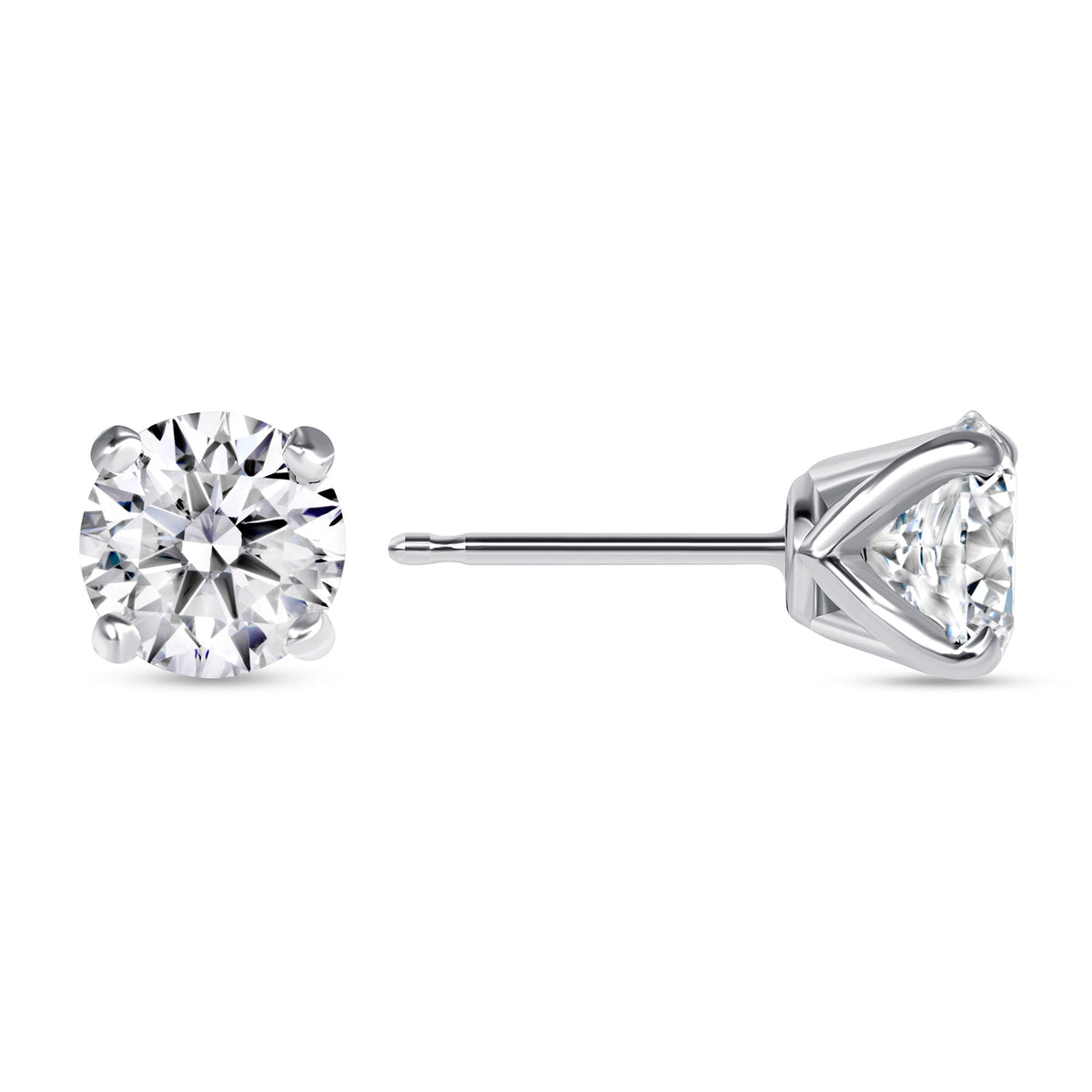
Lab-grown diamond vs moissanite vs cubic zirconia
A lab-grown diamond is real diamond, pure crystallized carbon, chemically and physically identical to a mined diamond. Moissanite is silicon carbide, a different mineral entirely. Cubic zirconia (CZ) is a synthetic crystal made of zirconium dioxide. All three can look bright and clear to the eye, but they are different materials with different hardness, brilliance, and long-term durability.
Comparison at a glance
Hardness (Mohs scale): Diamond (lab-grown or mined) is 10, the hardest known natural material. Moissanite is 9.25. Cubic zirconia is 8 to 8.5.
Composition: Diamond is pure carbon. Moissanite is silicon carbide. Cubic zirconia is zirconium dioxide.
Brilliance and fire: Diamond produces a balanced white and colored light return. Moissanite often produces more colored flashes (sometimes described as a 'rainbow' or 'disco ball' effect) due to its higher dispersion. Cubic zirconia has less fire and can appear duller over time.
Durability over decades: Diamond resists scratching and clouding indefinitely with normal wear. Moissanite is durable but can develop a slight film over many years. Cubic zirconia is more prone to surface scratching and clouding, and is typically replaced rather than kept for decades.
Price: Cubic zirconia is the least expensive, moissanite is mid-priced, and lab-grown diamond costs more than both, while remaining significantly less expensive than a mined diamond of the same size and quality.
How can you tell them apart?
To the naked eye, well-cut versions of all three can look similar in a photo. In person, a trained eye or simple tools (a diamond tester, which reads thermal and electrical conductivity) can distinguish them reliably. Moissanite in particular can register as a diamond on older, single-test diamond testers, which is why reputable retailers use dual testers or lab certification.
Frequently asked questions
Is moissanite a fake diamond?
No, moissanite is not fake or a diamond, it's a separate gemstone in its own right, though it is often marketed as a diamond alternative because of its similar appearance and lower price.
Why choose lab-grown diamond over moissanite if it costs more?
Because it is diamond, the hardest and most durable gem material, with the resale and certification standing of any diamond, at a fraction of a mined diamond's price.
Does cubic zirconia turn yellow over time?
CZ can develop a cloudy or slightly yellowed appearance after years of wear due to surface wear and exposure to lotions and oils; diamond and moissanite do not.
Every Rosette piece is set with IGI-certified lab-grown diamonds, D–E color and VVS2–VS1 clarity, in solid 14K gold. See the eternity bands and diamond studs, or read whether lab-grown diamonds are real diamonds.