What does IGI certified mean for a lab-grown diamond?
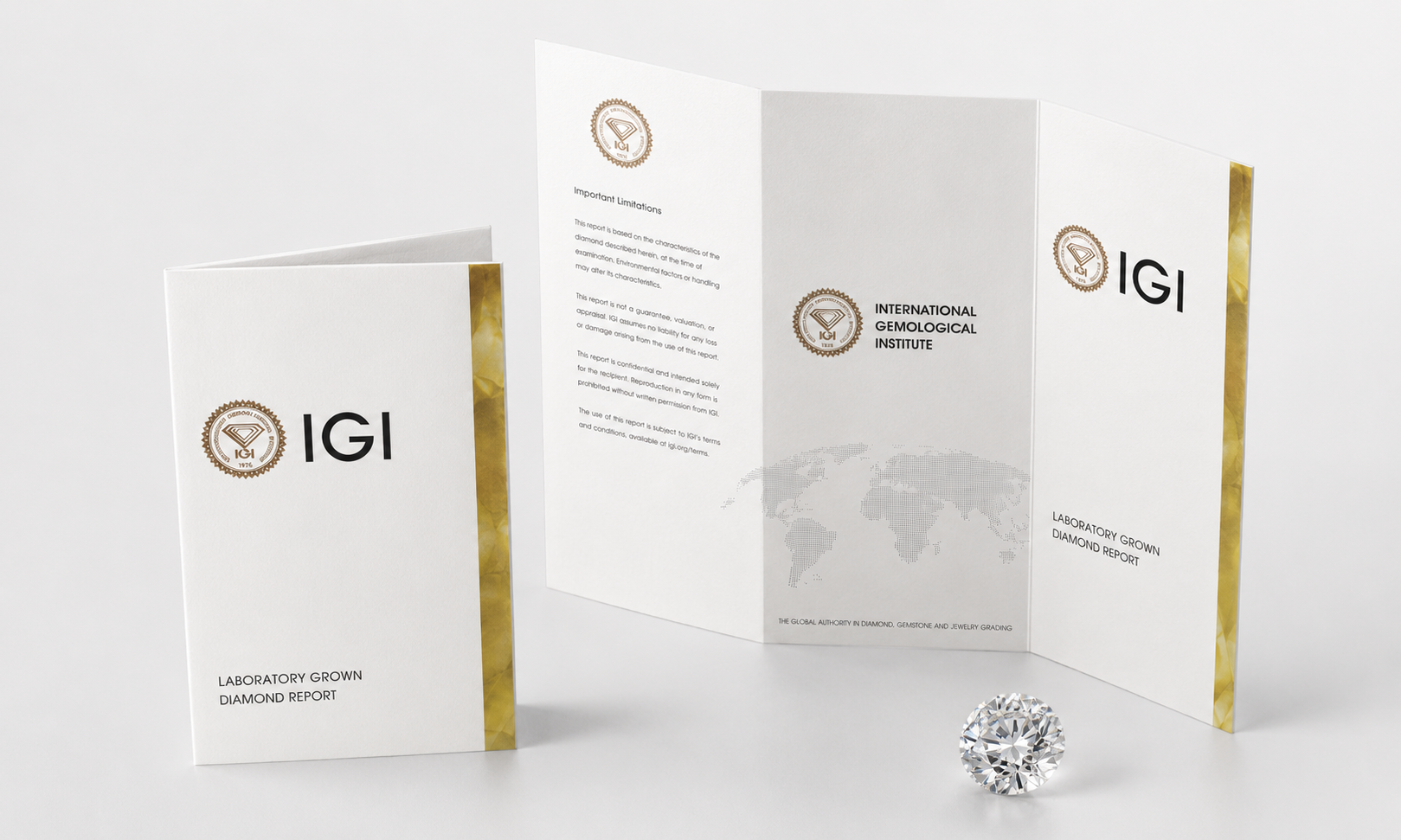
IGI certified means the diamond has been examined by the International Gemological Institute and documented in an independent grading report, its origin, carat weight, color, clarity, cut and measurements, assessed by a third party rather than by the seller.

What is on the report
- Origin, laboratory-grown or natural, established by testing rather than declaration
- Carat weight, measured, to two decimal places
- Color grade, on the same D-to-Z scale used for mined diamonds
- Clarity grade, from Flawless through to Included
- Cut, polish and symmetry, how well the stone was made, which drives how it returns light
- Measurements and proportions. The physical dimensions
- Any treatments, where they apply
The IGI publishes the scope of its laboratory-grown diamond report directly.
Why independence is the point
Any seller can describe a stone as "VS clarity, near colorless". A grading report means somebody with no interest in the sale looked at it and wrote down what they found.
It also makes comparison possible. Two stones described in a seller's own words cannot be compared reliably; two stones with grading reports can, because they were assessed against the same standard.
A report is not an appraisal
They answer different questions and are often confused.
| Grading report | Appraisal |
|---|---|
| Describes and grades the stone | Estimates a monetary value |
| Issued by a gemological laboratory | Issued by an appraiser or valuer |
| Does not state a price | Usually for insurance |
If you are insuring a piece, you will likely need both.
How to check a report is real
Every report has a number, and most graded stones carry that number laser-inscribed on the girdle, readable under magnification by any jeweler. IGI runs a public verification database: enter the number and the record comes back.
That is worth doing. A report you cannot verify is a piece of paper.
What to look at first
For most buyers, in this order: cut, because it drives how the stone actually looks; then color and clarity; then carat weight, which you have usually already decided.
Cut is the one people skip and the one that matters most. A well-proportioned stone at a modest color grade outperforms a poorly cut stone at a high one, every time.
What Rosette publishes
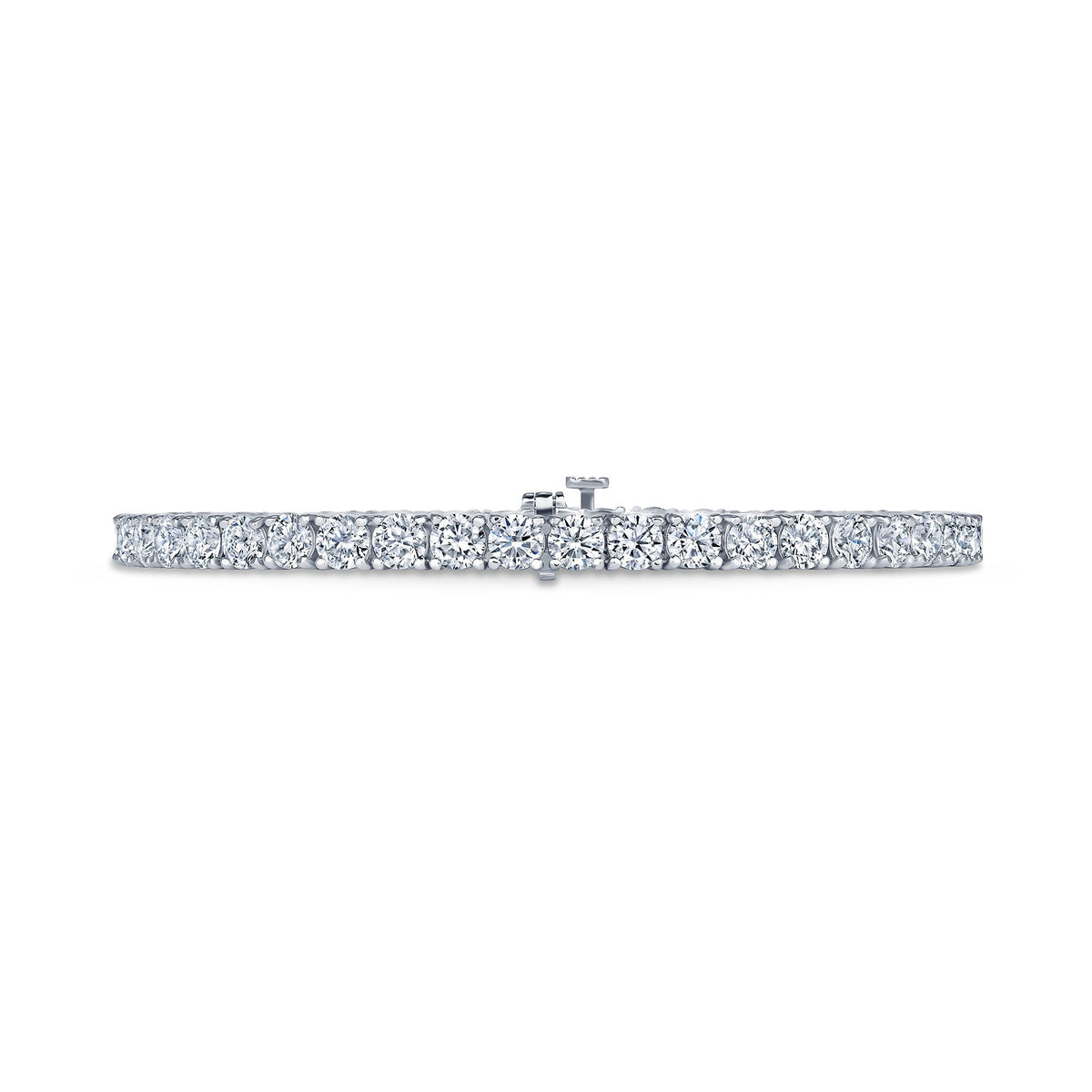
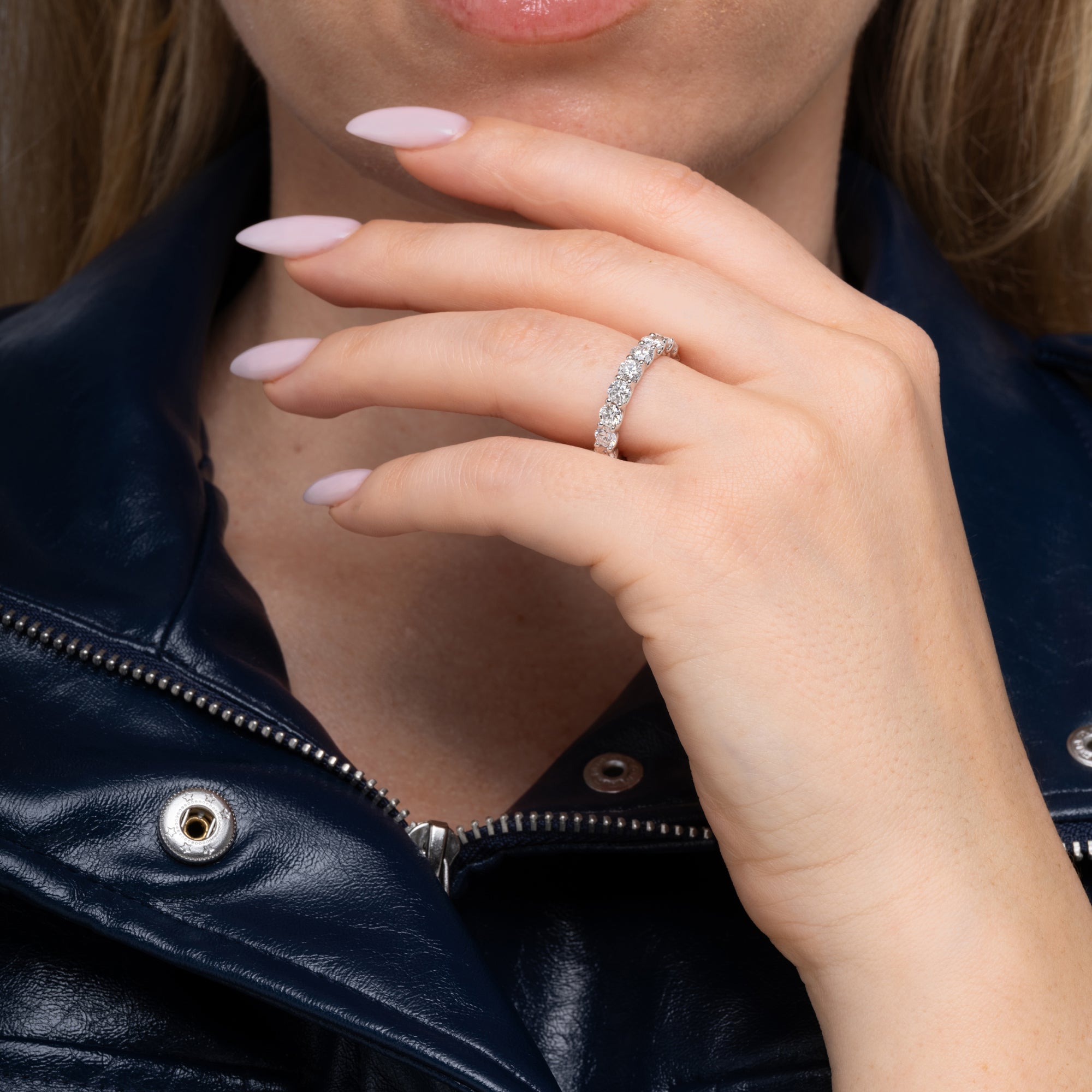
Every stone we set is IGI certified at D–E color and VVS2–VS1 clarity. The colorless end of the scale, at the clean end of clarity. The certificate is available on request and ships in the box.
We publish the grade rather than a range like "VS and above", because a floor tells you the worst it could be and a grade tells you what it is. See the range, or read how lab-grown diamonds are identified.